 Kinetic
The science of faster return-to-play, explained in five questions.
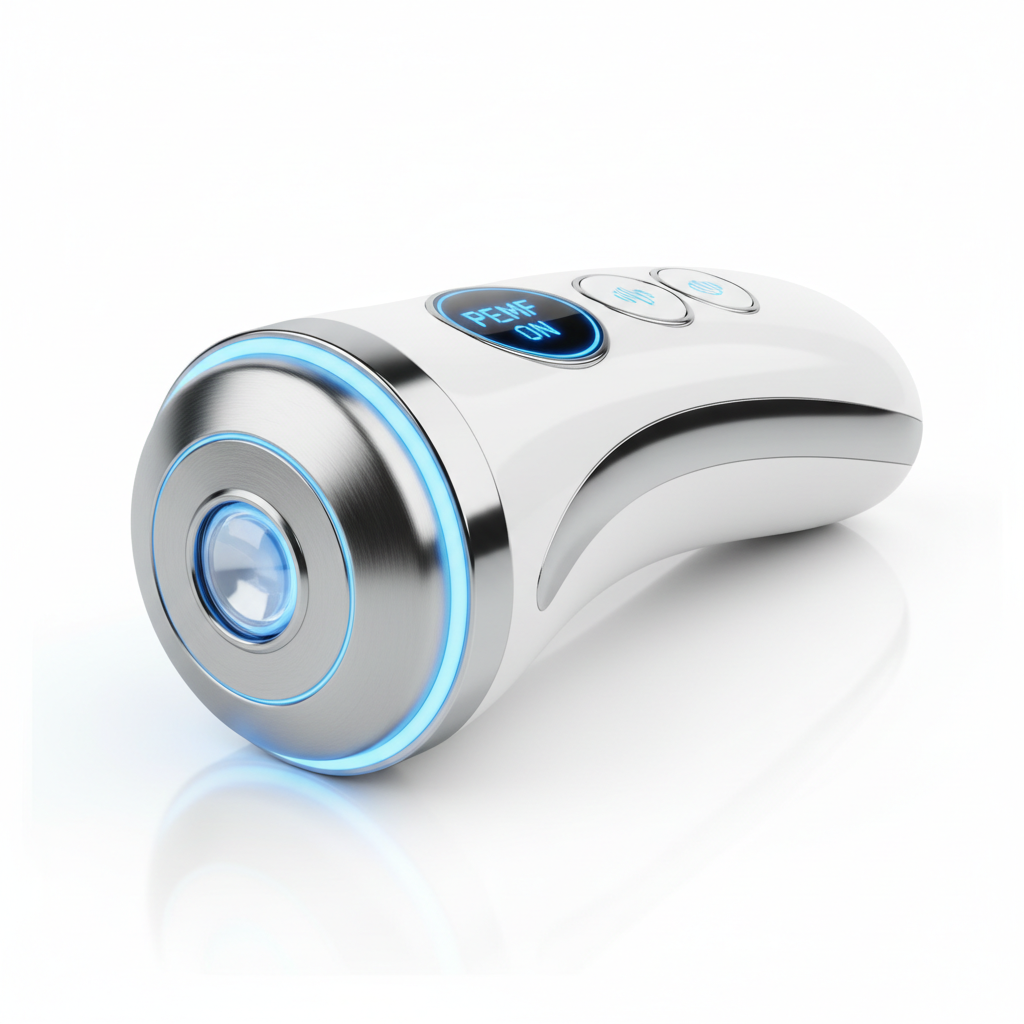
Contact Surface
Conformal electrode array, 14cm²
PEMF Coil Array
1–100 Hz programmable frequency
47%
Faster ligament healing vs. standard PT alone
JBJS, 20233.2×
Greater osteoblast proliferation vs. therapeutic ultrasound
CORR, 2022312
Post-op patients in Phase III RCT
NCT047182736 wks
Mean reduction in return-to-play timeline
AJSM, 2024How does pulsed electromagnetic stimulation differ from therapeutic ultrasound?
Ultrasound delivers mechanical vibration — thermal energy that accelerates local circulation. PEMF operates at the cellular membrane level, inducing transmembrane ion flux that upregulates fibroblast activity and osteoblast differentiation without thermal load.
The distinction matters clinically: thermal modalities are contraindicated in acute inflammation. PEMF can be applied from day one post-op, when early biological signaling has the highest therapeutic leverage.
Mechanism Summary
PEMF → ion flux → Ca²⁺ channel activation → TGF-β1 upregulation → collagen synthesis. The pathway is well-characterized in 200+ peer-reviewed studies.
Cellular Response Diagram · Schematic
Phase III RCT Results · NCT04718273 · n=312
Return-to-play timeline
% improvedCollagen density at 8 wks
% vs. baselinePatient-reported pain VAS
% reductionBone mineral density
% recoveryWhat do the clinical trials actually show?
The Phase III randomized controlled trial enrolled 312 athletes across six orthopedic centers. Subjects were randomized 1:1 to standard rehabilitation plus Kinetic versus standard rehabilitation alone.
Primary endpoint: return-to-play at 12 weeks. Secondary endpoints included MRI-quantified collagen density, patient-reported outcomes (KOOS, FAOS), and bone mineral density in fracture subjects.
Primary Outcome
"Clinically significant reduction in return-to-play timeline across all injury categories."
p < 0.001 · JBJS, 2023 · Peer-reviewed
How does Kinetic integrate into an existing rehabilitation protocol?
Kinetic is designed as an adjunct, not a replacement. It overlays on any existing post-op or conservative rehab protocol without disrupting surgeon-prescribed loading progressions.
The device pairs with existing CPT billing codes — 97032 (electrical stimulation, attended) or 97014 (unattended) — making reimbursement straightforward for physical therapy practices.
CPT 97032
Electrical stimulation, attended · ~$45/unit
CPT 97014
Electrical stimulation, unattended · ~$28/unit
HCPCS E0762
PEMF device, home use · DME eligible
Protocol Integration Timeline · ACL Reconstruction Model
Apply Kinetic device to surgical site. Begin 20-min PEMF session.
No thermal contraindication. Safe over surgical dressings.
Daily 20-min sessions. Concurrent passive ROM as tolerated.
PEMF upregulates TGF-β1 during peak collagen synthesis window.
Twice-daily sessions. Progressive loading per surgeon protocol.
Frequency shifted to 25–50 Hz for osteoblast differentiation.
Once-daily maintenance. Sport-specific rehab integration.
Tissue tensile strength reaches 80–90% of native at week 12.
Return-to-Play Timeline Comparison
You've seen the mechanism.
Now read the full data.
The Clinical Evidence Pack includes the full Phase III RCT manuscript, annotated protocol templates for three injury categories, CPT billing documentation, and device specifications for your facility's review committee.
Phase III RCT manuscript (JBJS, 2023)
Protocol templates: ACL, stress fracture, Achilles
CPT billing documentation & coding guide
Device specification sheet & safety data
Peer comparison: PEMF vs. ultrasound vs. LLLT